When Distance Was No Longer Enough
A Silent Morning
When I woke up that morning, I checked my phone like I always do. There were several messages in my family's WhatsApp group. My brother, who lives in Canada, had sent a screenshot from Colombia's seismological service, followed by a simple question: "Is everyone okay?" Then came several messages and missed calls, something that almost never happens. My parents send us a message every morning, usually very early. It does not matter where we are in the world; somehow, that message always appears. But that morning, after my brother's messages, there was only silence.
Then messages started coming from my other brother, who was in Armenia. He had not been able to reach his girlfriend. They had moved into a new apartment just two days earlier. I still did not understand what was happening. I was in my pajamas, barely beginning my day, when I looked at my boyfriend with tears in my eyes and said, "Something happened in Colombia, but I still don't know what."
Piecing Together the News
I was confused, but I knew something was wrong. It was a feeling I had never experienced as an immigrant.
I tried calling my parents on WhatsApp, but the call would not go through. I searched Colombian news, but there was still very little information. Then I opened Instagram, and that was when I began to understand. Just seven minutes earlier, a friend who lives in Cali had posted a story. He was crying in the video, asking for help because the building had just collapsed.
Measured in Minutes, Not Miles
That was the moment I understood something that those of us who live outside our home countries do not often think about: When tragedy strikes back home, distance is no longer measured in miles. It is measured in minutes. Every minute without a call, a message or an answer feels endless. You cannot run to them. You cannot show up at your parents' door. You cannot look at them with your own eyes and know they are safe. You can only stare at a screen, refresh the news and ask yourself the same question over and over: Are they alive?
My desperation grew. Cali is relatively close to Armenia, the city where I was born, and if something had happened there, it was impossible not to wonder whether my own city had been affected too. I started calling every relative I could think of, but no one answered. Then my friends started calling. Many of them are also from Colombia's Coffee Region and now live in Chicago. They wanted to know the same thing: "Is your family okay?" I still did not have an answer. Everything had happened too quickly.
My Mother's Voice
At 7:58 a.m., my mom finally sent a voice message. They were okay. They had felt several extremely strong movements, but they were safe. My mom had managed to reach my dad, who was at work and had felt the earthquake from the third floor.
My parents had already lived through the 1999 Coffee Region earthquake, a tragedy that left a deep mark on Armenia, Pereira and other communities across the region. They knew what it meant to feel the ground move like that. Still, they described this earthquake as one of the worst experiences of their lives. During those first few minutes, they thought it could be the end.
A Magnitude 7.4 Earthquake
The earthquake struck on the morning of Aug. 10, 2026. It registered a magnitude of 7.4 and was centered in San José del Palmar, Chocó. Although the epicenter was far from my hometown, the shaking was felt strongly across much of western Colombia. Pereira, Armenia, Manizales and Cali were among the cities affected, and several airports in the region temporarily suspended operations while buildings were inspected.
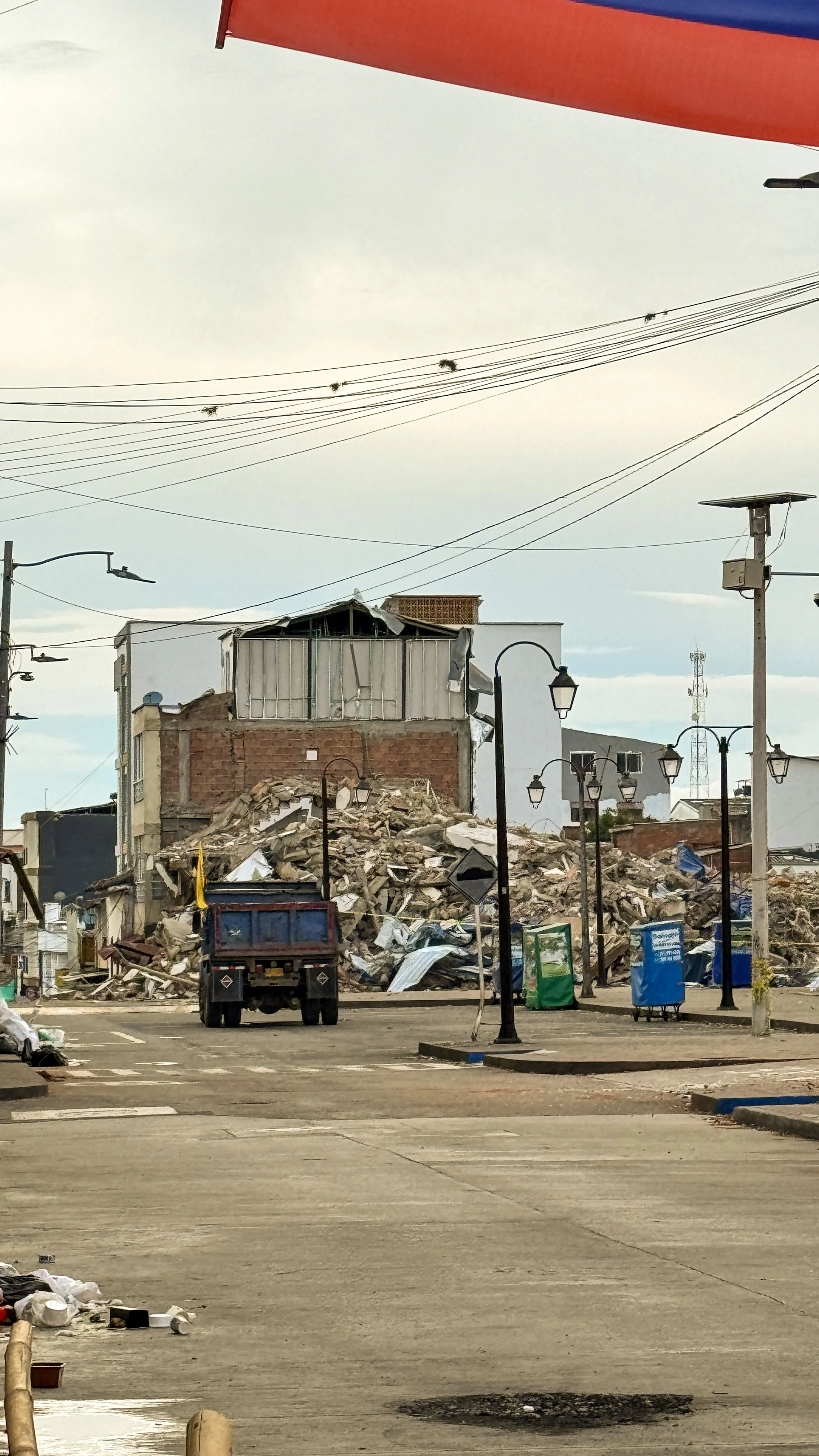
At that point, we still did not know how serious the disaster was. The numbers would change over the following days, but the images did not: damaged buildings, families searching for loved ones, people trapped beneath rubble, streets turned into emergency zones and an entire country trying to understand what had just happened.
A Different Kind of Fear
For those of us outside Colombia, social media became our news source. It also became a window that was almost impossible to close. Every video could bring news of someone who needed help, but it could also show a street we knew, a building we had walked past or a city where our parents, our friends and our memories lived.
This is where I want to pause, because talking about the fear of being an immigrant during a disaster like this can seem, at first, like an attempt to claim a pain that is not ours. It is not, as long as we understand our place. The deepest pain belonged to the people who were there: the people who were trapped, those who lost parents, children, siblings or friends, those who watched their homes collapse and those who were forced to sleep outside or leave behind the businesses that had supported their families for years. They are, and will always be, at the center of this story.
But those of us who were far away experienced a different kind of fear: the fear of not knowing.
From a distance, fear does not disappear. It changes. It becomes waiting for a phone call, checking your phone again and again, trying to understand what is happening through videos and messages and wondering whether the people you love are still alive. It is a strange kind of fear because there is so little you can do with it. You cannot run toward them. You cannot open a door or look through a window. You can only wait.
That first night was especially difficult. The aftershocks, the uncertainty and the inability to communicate with our families kept us glued to our phones. In Colombia, thousands of people were experiencing the earthquake firsthand. Outside the country, thousands more were experiencing its consequences from far away, waiting for a message, a call or a photograph confirming that the people they loved were still alive.
A House Becomes a Shelter
By that afternoon, I knew my parents were safe. But my brother and his girlfriend had lost their home, and my aunts had also been affected. Within hours, they had been forced to leave their homes with whatever they could carry and find somewhere they felt safe. That left me with a question I still think about: After something like this happens, is there really such a thing as a safe place?
The next day, my parents' house became a temporary shelter. My brother, his girlfriend, my aunts and anyone else who needed somewhere to go could come there. A house that had simply been my parents' home for years suddenly became a refuge for people who had lost theirs.
The first few days were filled with uncertainty. The aftershocks continued, the news was devastating and families were still waiting to hear from their loved ones. But in the middle of all that fear, something else happened, something that reminded us who we are as Colombians: When one of our own needs help, the rest of us move.
Chicago Answers the Call
The same day the earthquake struck, collection centers began appearing across Colombia and in communities around the world. In Chicago, I joined Cielito Paradise, a Colombian coffee shop, to raise money for the Red Cross. Our goal was $5,000. We raised more than $7,000. Other businesses and members of our community joined us too, and within days, donations, supplies and boxes of aid were being sent to Colombia.
I tried to help in every way I could. I will be honest: I tried everything I could think of. Because when tragedy affects your own people, helping stops feeling like an act of solidarity. It becomes a necessity. It was the least I could do while being so far away.
But I also learned something uncomfortable. Natural disasters happen every day. We see a story, feel sad, say, "That is terrible," and then continue with our lives. It is only when tragedy has the name or face of someone we know that we truly understand what it means.
Five of my friends died. Families close to people I love lost everything. Suddenly, a tragedy that might once have felt far away had become part of my own story. The days after Aug. 10 were filled with work, uncertainty and attempts to help. I remember calling my parents as many as 15 times a day. I wanted to make sure they were okay. I needed to hear their voices. I needed to know that reality could not change again in a matter of seconds.
The Decision to Go Home
Then, on Wednesday, Aug. 26, I decided I had to go see my family.
Sixteen days had passed since the earthquake.
I traveled for more than 20 hours to reach Quindío. My flight was delayed, changed, postponed and canceled as many as seven times. But finally, on Thursday, Aug. 27, I arrived.
A Homecoming Like No Other
My mom was waiting for me at the airport. She had tears in her eyes and her arms open. I hugged her, and for a moment I thought about how easily I could have lost the chance to do that. After everything that had happened, seeing her again did not feel like an ordinary homecoming. It felt like a privilege.
When I arrived in Pereira, an airport I have used countless times to return home, I saw the reality of the earthquake almost as soon as I stepped off the plane. There were closed areas, damaged structures and spaces that no longer looked or functioned the way they had before. The earthquake was right there in front of me. It was no longer an Instagram story or a video someone had sent me on WhatsApp. It was my country, and I was standing in it.
After hugging my parents, we got in the car and headed toward Armenia. We passed through some of the affected areas of Pereira, and as we drove, I began to see a city that looked different from the one I knew. There were cracked walls, damaged buildings, families living in tents, business owners forced to leave their stores and people trying to recover whatever they could. There is a particular kind of pain in seeing something familiar reduced to rubble.
My parents' home had suffered minor damage. My brother's home, however, had to be evacuated. They took whatever they could and said goodbye to the place they had only begun calling home two days earlier, or perhaps to the home they were still in the process of building.
During my stay, I experienced some of the things I had only been able to imagine from Chicago: power outages, unreliable internet, water rationing and a constant feeling of uncertainty. But I also understood that those inconveniences were small compared with what so many other people had lost. They had lost family members, homes, businesses, belongings and the lives they knew.
Bringing Aid to Armenia
I walked through Armenia. I walked its streets and bought 45 food baskets for people who still needed help. But I especially wanted to think about the people who are often among the last to be seen after a disaster: street vendors, informal workers, people who depend on what they sell each day and those who have no home to return to. Rebuilding a city is not just about putting buildings back up. It means rebuilding the lives of the people who keep that city alive.
Quimbaya, Colombia's "Land of Light"
I also went to Quimbaya, one of the municipalities that is deeply connected to the identity of Quindío. For those of us who grew up in the region, there is a tradition there that means much more than a December celebration: the Festival of Lights and Lanterns.
Quimbaya is known as Colombia's "Land of Light." Law 2330 of 2023 recognized the festival's contribution to the cultural richness and diversity of Colombia's Intangible Cultural Heritage and established a process for the Ministry of Culture to pursue its recognition as national heritage.
Every Dec. 7 and 8, the tradition transforms Quimbaya's streets into a celebration of light. These are not simply lanterns placed around town for decoration. Families, neighborhoods and communities spend months creating them, competing with one another and preparing for one of the most anticipated nights of the year.
In December 2025, I had been there with my family. We walked those same streets, celebrated together and watched people turn the night into light. I remember the lanterns, the crowded streets and that unmistakably Colombian feeling of celebrating something that belongs to everyone.
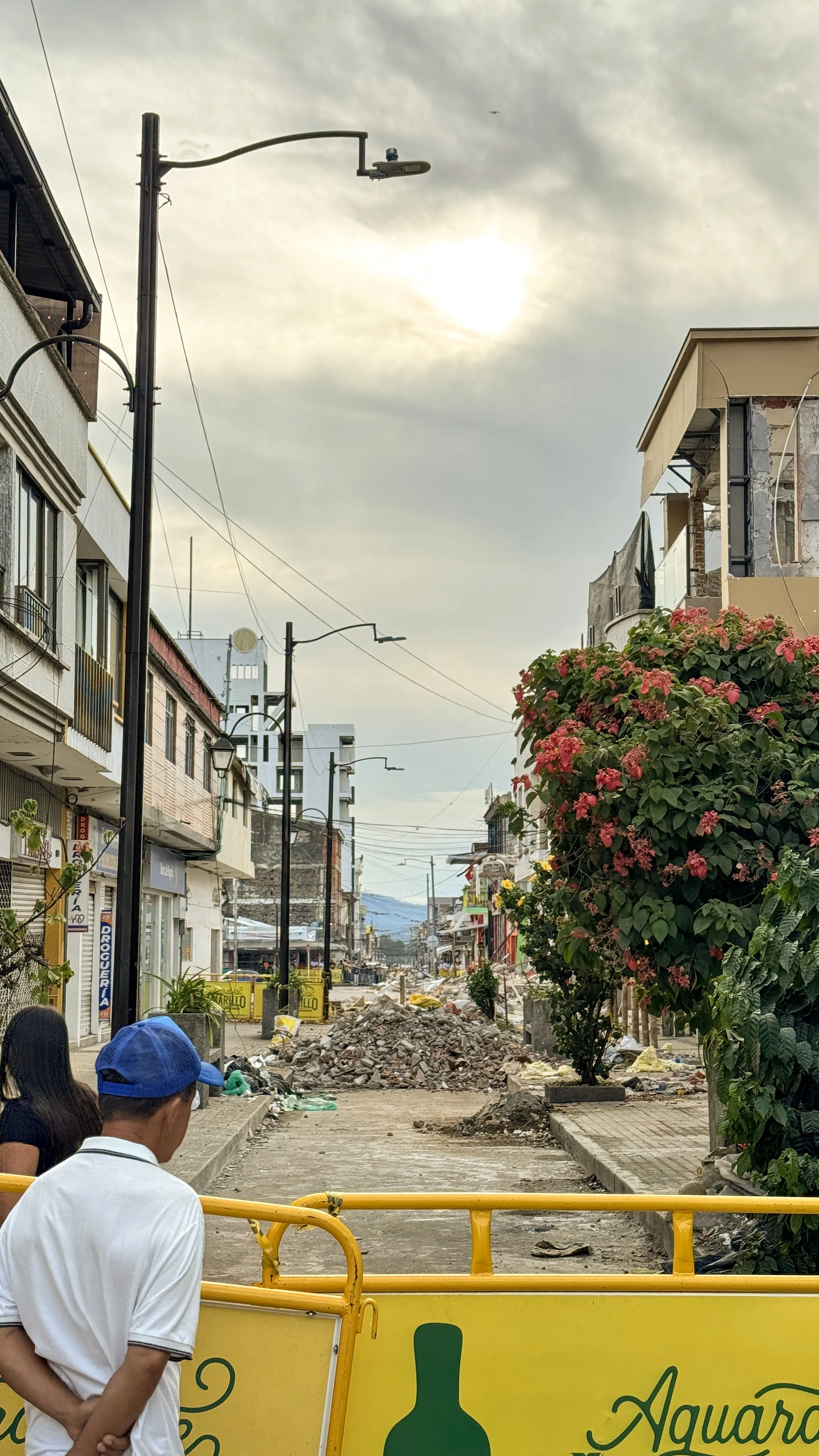
On Aug. 29, 2026, I went back. This time, it was different. The plaza and surrounding areas were closed. Some structures needed to be evaluated, repaired or demolished. The same place I had associated with light, celebration, community and memory only months earlier was now forcing me to look at the scars left by a disaster.
When a City Loses More Than Buildings
That was when I understood that a city does not disappear only when its buildings fall. It also changes when the places where we created our memories disappear, even temporarily. When a plaza can no longer function as a plaza, when a church can no longer be entered, when a street you once knew by heart becomes a restricted area, everyday life changes too.
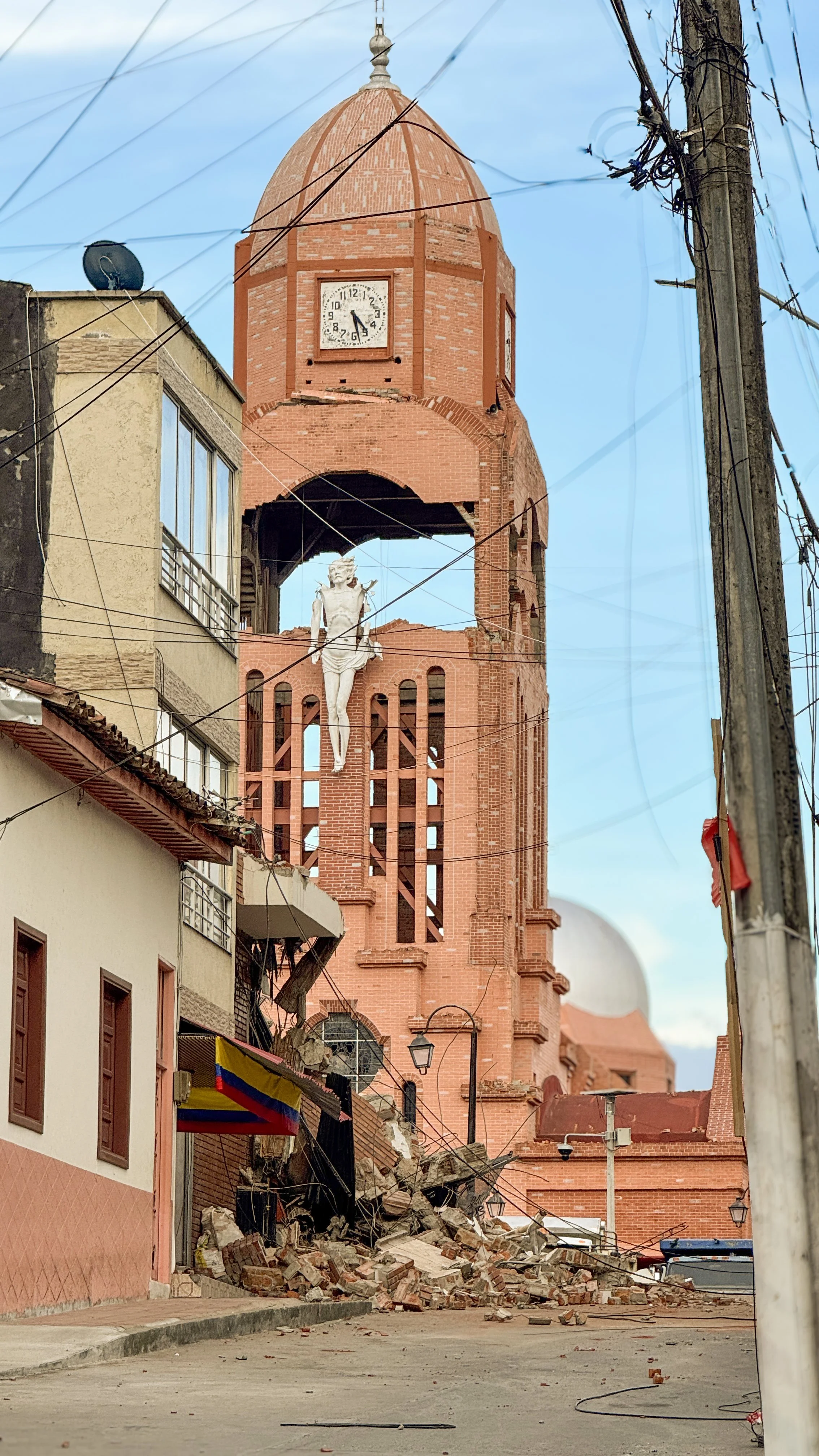
That is probably why the damaged churches affected me so deeply. For many Colombians, a church is not just a building. It is where we were baptized, where we went with our grandparents, where our parents got married, where we lit a candle for someone we loved and where, at some point in our lives, we went to ask for everything to be okay. Whether or not we are religious, these places are part of our collective memory. When a church is damaged, it is not only the walls that are affected. A piece of a community's history is damaged too.
And yet, as I walked through the affected areas, I realized something else. A city can lose buildings and still have a soul. It can lose streets and still have an identity. It can lose homes and still remain home to the people who refuse to leave.
That is what I saw during my return. People helping each other, sharing what they had, cooking for strangers, opening their homes, clearing rubble, sending money from other countries and asking, even after losing so much, "What can I do to help?"
A Story That Must Not Disappear
Weeks have passed since Aug. 10, but for many families, the earthquake is not over. The cameras will eventually leave. The news will move on. The country will have other stories to cover. But families will still be sleeping outside their homes. Business owners will still be trying to rebuild their livelihoods. Entire communities will still need months or years to recover.
That is one of the greatest responsibilities of those of us who tell stories: not allowing a tragedy to disappear from the conversation simply because it is no longer making headlines.
I returned to Colombia thinking I was going to hug my family. When I arrived, I realized I had come to hug all of my people. My people, your people, our people.
There are moments when tragedy stops belonging to one family, one city or one region. It becomes the pain of an entire country. And maybe that is why, when I returned home, it did not feel like I was returning only for my family. It felt like I was returning for all of us.
Confronting the Fragility of Life
But I also came back afraid. Afraid that I could have lost someone I loved. Afraid that I could have arrived too late. Afraid of what it meant to imagine living through a tragedy like that alongside the people I love. Being there meant being close to my family again, but it also meant confronting a question that, from Chicago, had seemed almost abstract: What happens if the ground shakes again while we are together? What happens if we are not as lucky next time?
That fear made me think about something even deeper: how fragile life really is. We know life is fragile. We have heard it our entire lives. But routine has a way of hiding that truth. We hide it behind "see you tomorrow," "I'll call you later," a message we will answer when we have more time and the assumption that the people we love will still be there whenever we decide to reach out.
Until something happens, and within seconds, everything that seemed permanent can disappear.
That may have been one of the hardest things for me to process. Life can change before we even have the chance to say goodbye. A home can become unlivable in seconds. A street that was part of our daily routine yesterday can become unrecognizable tomorrow. And the people we believe will always be there may not be.
The fragility of life is always there. Most days, we simply do not see it. The earthquake forced me to see it.
The Embrace That Changed Everything
Maybe that is why, when I finally hugged my mom at that airport, the hug felt different. It was not simply the embrace of a daughter returning home after a trip. It was the embrace of someone who had spent days imagining every possible outcome and who, thankfully, still had the chance to hug her mother.
But when I walked through those streets again, when I saw destroyed homes, closed businesses, damaged churches and families trying to rebuild what remained, I understood that the hug I was able to give was not a possibility everyone had.
That was when the tragedy stopped being only my family's story. I returned as a daughter, a sister, a friend and a journalist. I had my camera and my phone in my hands, but more importantly, I had a responsibility to look closely, to listen and to tell what I saw. Because telling a story about tragedy does not mean claiming the pain of the people who experienced it. It means making room for their stories. It means making sure their names do not become statistics, that their losses are not reduced to a number and that when the world stops paying attention, there is still someone willing to remember.
Rebuilding, Together
I do not know how long it will take to rebuild everything that was lost. But I know that a country is also rebuilt when someone opens the door to their home, when someone shares what little they have, when a community comes together and when someone who has lost almost everything still asks, "What can I do to help?"
A country is rebuilt when those who are far away choose to come closer. When those who are safe choose not to forget the people who are still struggling. And when those of us who tell stories understand that our responsibility does not end when the story disappears from the headlines.
Because you can migrate. You can cross borders, build a new life and learn to call another place home. You can get used to measuring distance in flights, celebrating birthdays over video calls and saying "see you soon" without knowing exactly when that soon will be.
But there are some things distance cannot erase. Life can take us far from home, but there are pains that bring us back. There are people who remain our home even when we live thousands of miles away, and there are places that, no matter how much our cities, countries or lives change, will always live inside us.
I returned to Colombia thinking I was going to hug my family. I ended up hugging an entire country: the people who lost their homes, the people still trying to rebuild their businesses, the people who opened their doors to strangers, the people who helped from thousands of miles away and the people who, even in the middle of fear, kept asking what they could do for someone else.
I returned to a country that was wounded, frightened and still trying to understand how to stand again. And that may be what I want to remember most from all of this. The earth can shake us. It can take away our certainty, our homes, our familiar places and the people we love. But it can also remind us of something we forget far too easily in the middle of our routines: Nothing is guaranteed. And because nothing is guaranteed, we have a responsibility to the people beside us.
As long as we keep coming together to help, opening our doors, reaching out our hands, telling these stories and refusing to forget, we will keep finding ways to stand again. Some tragedies change a country forever. But they can also remind us what that country is made of. Maybe that is the story I want to tell.
Not only the story of the earth that shook, but the story of a country that, after the fear, found its way back to one another.